SALES:
Integrated vs. Clip-On Retina Lasers: Understanding the Key Differences
08/10/2026
When selecting retinal laser equipment, ophthalmic practices often choose between an
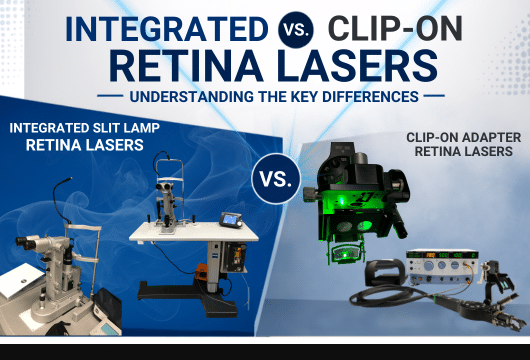
integrated slit lamp retina laser and a clip-on adapter retina laser. Integrated systems such as
the Ellex Integre and Zeiss Visulas 532s LSL combine the slit lamp and laser into a single
platform, while clip-on systems like the Iridex GL, TX, and IQ attach to a compatible slit lamp.
Both integrated slit lamp retina lasers and clip-on adapter retina lasers are available as
professionally refurbished retinal laser systems, offering reliable, cost-effective solutions for
retinal treatment.
Understanding the Difference
An integrated slit lamp retina laser combines the slit lamp and laser delivery system into a
single, dedicated platform. Systems such as the Zeiss Visulas 532s LSL and the Ellex Integre
are designed specifically for this purpose, which offer a streamlined treatment experience with
minimal setup and consistent alignment. Due to both components being designed to work
together, integrated systems provide excellent stability and reliability. Many ophthalmologists
also appreciate the ergonomic design, which can improve comfort during longer procedures.
While integrated systems typically require a higher initial investment, they often enhance
workflow efficiency for practices that perform retinal laser treatments on a regular basis.
A clip-on adapter retina laser, by contrast, attaches to a compatible slit lamp, allowing
ophthalmic practices to add treatment capabilities without purchasing a dedicated integrated
unit. Systems like the Iridex GL, TX, and IQ series are designed to provide this flexibility while
making use of existing slit lamp equipment. This approach offers a more cost-effective solution,
especially for practices that already own compatible equipment. Since the laser can often be
moved between slit lamps, clinics can adapt as their needs change while making efficient use of
available space. However, clip-on systems may require additional setup and alignment before
treatment, which can impact workflow.
Long-Term Maintenance and Fiber Protection
Another factor to consider is long-term maintenance. Integrated slit lamp retina lasers feature
a protected, enclosed fiber optic cable, which make it less susceptible to accidental damage and
reducing the likelihood of premature replacement.
By comparison, clip-on adapter retina lasers use an exposed fiber optic cable that runs between
the laser console and the slit lamp. While this design offers flexibility, the cable is more
vulnerable to damage from everyday use, such as improper handling, patients pulling on it, or
even chairs rolling over it. As a result, clip-on systems may require more frequent fiber
replacement over time.
Choosing the Right System for Your Practice
The best choice depends on how your practice operates. Consider these key factors:
1. High-volume retina clinics often benefit from the speed, convenience, and consistency
of an integrated system, while ophthalmic practices with lower treatment volumes may
find that a clip-on adapter provides excellent value.
2. Budget is another important consideration. Clip-on systems generally have a lower
upfront cost, making them an attractive option for ophthalmic practices looking to expand
services while maximizing their existing investments. However, integrated systems may
deliver long-term value through improved efficiency, despite being initially more
expensive.
3. Evaluate your current equipment and available space. If your practice already has
compatible slit lamps, a clip-on adapter can be a practical way to add retinal laser
capabilities without increasing your equipment footprint. Ophthalmic practices seeking a
dedicated treatment station may find an integrated system better suited to their long-term
goals.
Finding the Best Fit
Both integrated slit lamp retina lasers and clip-on adapter retina lasers offer reliable solutions for
retinal treatment. By considering your patient volume, budget, available space, and long-term
practice goals, you can confidently select the retinal laser system that best supports your clinical
needs and operational objectives. Whether you’re investing in your first retinal laser or upgrading your current equipment, our team
can help you identify the solution that best fits your clinical goals, workflow, and budget.
Contact Laser Locators today to discuss available inventory and discover how professionally refurbished equipment can support your clinical and budgetary goals.