SALES:
Choosing the Right Ophthalmic Microscope: How to Match Your Equipment to Your Practice
07/13/2026
Choosing the right ophthalmic microscope is one of the most important equipment decisions your practice will make. Whether you’re opening a new ophthalmology practice, upgrading aging equipment, or expanding your surgical capabilities, the right microscope can improve workflow, surgical precision, and long-term value.
Many assume the most expensive microscope is automatically the best option. In reality, the best microscope is the one that matches your surgical needs, budget, and future growth plans.
The Two Main Types of Ophthalmic Microscopes
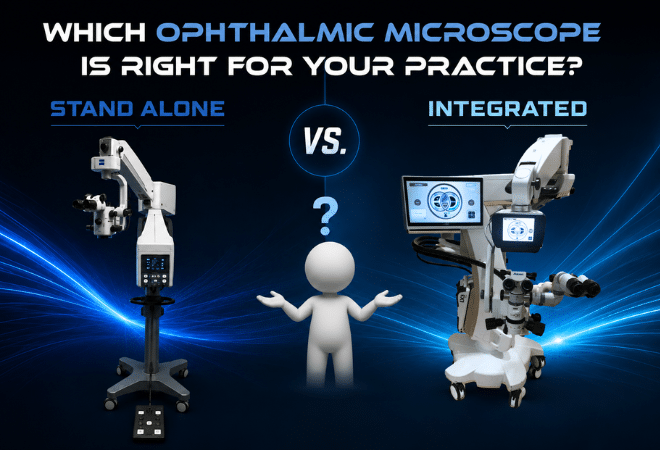
Most ophthalmic microscopes fall into one of two categories: stand-alone microscopes and advanced integrated surgical microscopes.

Option 1: Stand-Alone Ophthalmic Microscopes
Typical Price Range: $15,000 – $40,000 (refurbished)
Stand-alone microscopes function independently without extensive integration into digital visualization or surgical guidance platforms, making them an excellent choice for practices looking for dependable performance at a lower cost. These systems typically provide:
- High-quality optics
- Simple operation and maintenance; does not require a service contract
- Independent operation without equipment integration
- Lower capital investment
- Excellent value for routine ophthalmic procedures
Keep in mind: The stand-alone will likely not include higher-end retina upgrades such as Oculus BIOM® and Zeiss Resight® and may not include video or recording equipment.
For many practices performing cataract and anterior segment surgery, a quality stand-alone microscope delivers everything needed without paying for features that may never be used.
Option 2: Advanced Integrated Ophthalmic Microscopes
Typical Price Range: $60,000 – $200,000+
Advanced systems are designed for practices that want enhanced visualization and connectivity. They are often the preferred choice for advanced retina specialists and practices performing more complex procedures. Because these systems are more advanced, it’s also important to consider the availability of a manufacturer service contract when comparing different models.
Depending on the model, ophthalmic microscope features may include:
- Digital imaging integration
- Heads-up display technology
- High-definition (HD) video and recording
- Surgical guidance systems
- Enhanced illumination
- Greater ergonomic customization
- Integration with other ophthalmic technologies
These ophthalmic microscopes are commonly found in high-volume surgical centers, academic institutions, and practices performing more complex procedures where advanced technology can improve efficiency and documentation.
Which Microscope Is Right for Your Practice?
Instead of asking which ophthalmic surgical microscope is “best,” ask which one best fits your practice.
Consider the following:
- Does your organization require all equipment to be under a service agreement?
- Which procedures do you perform most often?
- How many surgeries do you perform each week?
- Do you need digital imaging or video recording?
- Will the microscope need to integrate with other equipment?
- What is your equipment budget?
- Are you buying for today’s needs or future growth?
Your answers will help determine whether a stand-alone microscope or an advanced integrated system is the better investment.
Buy What You’ll Actually Use
One of the most common purchasing mistakes is paying for technology that never gets used. While advanced ophthalmic surgical microscopes offer impressive capabilities, those features do not always provide additional value for every practice.
On the other hand, practices with increasing surgical volume or more specialized procedures may require the efficiency and functionality of an integrated system.
The goal is to invest in equipment that supports your workflow today while leaving room for future growth.
Let Laser Locators Help You Choose the Right Microscope
Every ophthalmology practice has unique clinical, operational, and financial goals. At Laser Locators, our experienced team works closely with ophthalmologists, ambulatory surgery centers, and hospitals to recommend ophthalmic microscopes that align with their specific needs, rather than simply recommending the newest option.
Whether you’re looking for a dependable stand-alone microscope or a fully integrated surgical visualization system, our team is here to help. Every microscope is inspected, refurbished, calibrated, and tested by our engineers before leaving our 12,000-square-foot facility in Tampa, Florida.
Contact Laser Locators today to speak with one of our ophthalmic equipment specialists, explore our current inventory, or schedule a virtual or in-person tour of our Laser Performance Center.